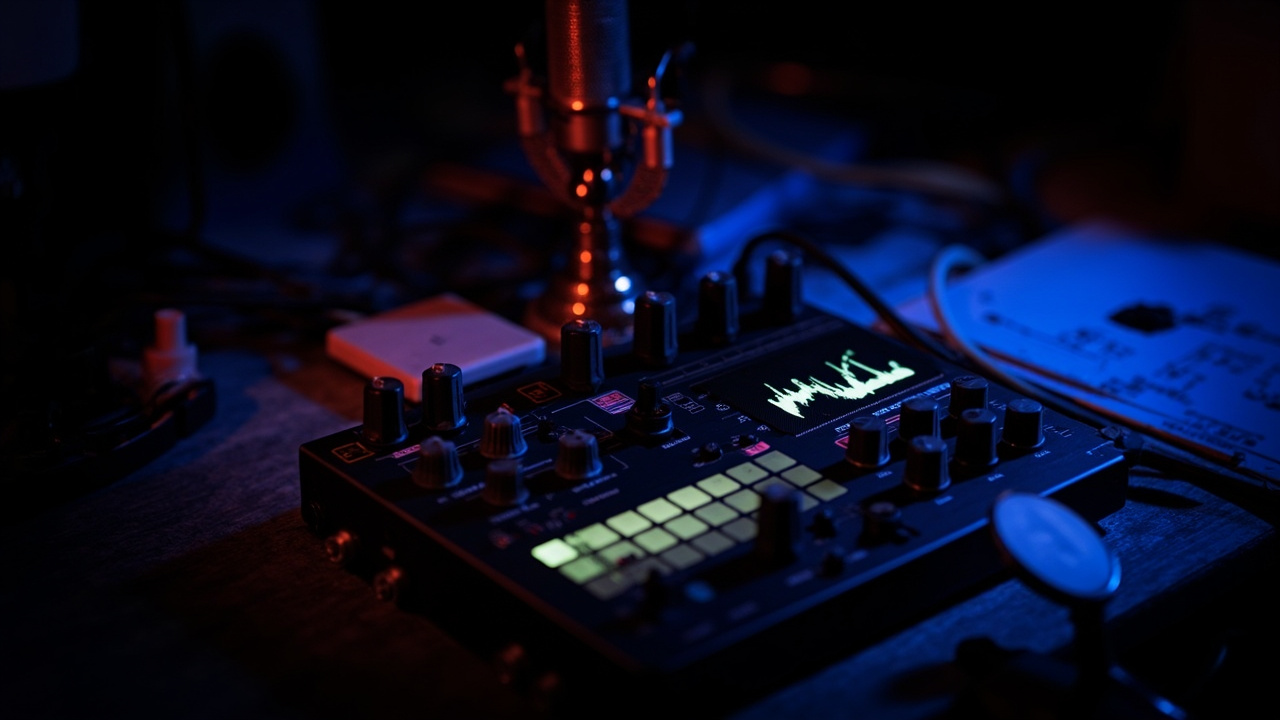
TL;DR: Thoughtful Things opened Kickstarter orders for Engram, an offline AI sampler built to warp audio and explore model glitches.
Music startup Thoughtful Things has just launched the Kickstarter campaign for its first instrument, Engram, according to The Verge. The device is described as a sampler and groovebox that mangles incoming audio and hallucinates completely new sounds. The report, published Sep. 27, 2026 at 8:46 PM UTC by weekend editor Terrence O'Brien, frames the hardware as an experimental tool rather than a hit-song generator. A separate overview from the Avakata News Desk, published Sep. 26, 2026, similarly describes Engram as a hardware sampler that uses local AI to generate experimental sounds from broken hallucinations.
The launch centers on a limited Kickstarter run, according to The Verge. Starting pledges were set at $675. The company had not announced a final retail price, though The Verge noted the $675 pledge was listed as a 30 percent discount, implying a likely range between $850 and $900. A Gearspace forum update discussing the campaign mentioned regularly priced units at $770 after early-bird units sold out, and said Thoughtful Things was hoping to ship in May 2027. That shipping target was presented in the forum post as a company hope, not as a completed delivery.
A sampler and groovebox built around unstable sound
Engram combines sampling with AI-driven sound creation, according to The Verge. It can process an incoming recording and can also produce sounds that were not present in the input. The emphasis is on experimental and uncanny results and on testing the outer behavior of audio models.
That positioning separates Engram from text-to-song services. The Verge reported that the product is not a “push-button, get-song” device aimed at creating material suited for top-40 radio. The Avakata News Desk overview likewise stated that Engram is not a push-button song generator and described it instead as an instrument for sound designers seeking uncanny, non-mainstream audio.
Founder Evan King demonstrated the concept in the campaign video, according to The Verge. King used his voice to request “piano,” and the device returned something glitchy and vaguely piano-like. King described the approach as thinking of Engram as a “field recorder for latent space,” a phrase pointing to exploration of AI hallucinations and experimental sound design.
Offline operation with a custom tiny model
Engram is not connected to the internet, according to The Verge. It runs a “tiny AI” locally on the hardware. According to the Kickstarter listing cited in that report, the model was designed in-house and custom-trained.
The Avakata News Desk overview also described the model as designed and custom-trained in-house by Thoughtful Things and as running locally without an internet connection. The outlet noted that local operation distinguishes the device from cloud-dependent AI music tools.
An earlier product description quoted in a Gearspace thread started Apr. 19, 2026 presented the same offline principle in hardware terms. That description said no internet connection, app, or subscription service is required and that everything runs on the Engram hardware. It characterized the device as combining a traditional sampler-groovebox workflow with hands-on sample generation through audio model bending. It also likened model bending to circuit bending, but for neural networks.
Training-data pledge and firmware openness
Thoughtful Things said its audio models were trained only on openly available material cleared for business use, according to The Verge. The company statement quoted in the report said:
“We’ve trained our audio models on open datasets that only contain audio licensed for commercial use (CC-BY or similar).”
The same statement added that the company had not trained and would never train its models on non-commercial, pirated, or otherwise stolen data. The Avakata News Desk overview repeated that training-data claim, saying training came exclusively from open datasets containing audio licensed for commercial use under CC-BY or equivalent terms.
The company also plans to open Engram’s firmware so others can adjust it or load their own custom models, according to The Verge. The Avakata News Desk overview similarly reported a plan to open the firmware for community modifications and custom model loading.
The Gearspace-quoted product description described a related capability as “pluggable audio models.” It said users could create, share, and plug in new audio models, comparing the idea to old-school ROMplers. That description predated the Kickstarter launch and carried a note that the design was a non-commercial research prototype and might change.
How model bending is supposed to work
Model bending is the central performance idea, according to the reports. The Verge said Engram draws inspiration from circuit bending and lets users tweak and even break its tiny AI models. The purpose is to push the models beyond their normal limits and record the resulting artifacts.
The Gearspace-quoted description said users could take control of model-bending parameters to push tiny audio models beyond their limits and discover expressive, uncanny new sounds to sample. It then described a workflow of slicing, flipping, and manipulating those samples. It summarized the method as old-school musique concrète techniques paired with modern technology.
The Avakata News Desk overview described the same workflow as feeding audio into the device, manipulating it in real time, and using AI as one element in a larger performance or composition. It contrasted that process with typing a prompt and receiving a finished song.
Hardware connections and sampling tools
The early hardware description republished in the Gearspace thread listed specific inputs, outputs, and sampling functions. Those listed features included neural audio processing for warping a user’s own recordings with an embedded neural audio codec. They also included sample generation for creating and glitching short bursts of audio for sampling and manipulation.
Additional listed features included model bending for glitchy neural audio processing, plus sample and pattern storage and recall. For connectivity, the list named MIDI input and output, CV sync/gate input and output, stereo line-level input for sampling, and headphone output. For capture, it named an on-board microphone for lo-fi sampling and voice control.
The Verge’s Kickstarter-focused report did not independently confirm that every prototype connector would appear in the shipping version. The Gearspace thread’s original April description explicitly warned that the design might change. The Kickstarter campaign therefore represents the commercial offer, while the earlier feature list documents the prototype direction that preceded it.
Price tiers described during the campaign
Pricing information comes from campaign materials and community discussion rather than a final retail announcement. According to The Verge, the limited Kickstarter run started at $675. The company had not stated a retail price, but The Verge calculated a likely $850 to $900 range from the stated 30 percent discount.
The Gearspace forum update gave a different tier visible during the live campaign: regularly priced units at $770 after early-bird pricing sold out. The post also said the project was close to reaching its goal with 26 days remaining at the time of that update. Those figures describe campaign tiers and campaign momentum, not final store pricing.
The Lynxflow technology blog, in a Sep. 27, 2026 overview, listed the same early price structure: a $675 Kickstarter early pledge at 30 percent off and a projected $850–$900 retail range. It also listed the AI deployment as fully offline and the open-source plan as forthcoming firmware access for community modifications and custom model loading. The blog characterized the intended user as an experimental music producer rather than a pop-song maker.
Why the project emphasizes imperfection
The product’s premise treats model errors as material. According to The Verge, Engram is about creating experimental, uncanny sounds and pushing AI audio models beyond their limits. The Avakata News Desk overview said Thoughtful Things is betting that the future of AI audio includes imperfection, unpredictability, and surprise.
In practical terms, that means a distorted piano-like tone is presented as a successful result when it reveals an unusual texture, not as a failure to imitate an acoustic piano. The campaign video’s piano example, as described by The Verge, illustrates that distinction: the output retained enough piano character to be recognizable while remaining glitchy.
The approach also shapes who the device is aimed at. The Avakata News Desk overview said Engram serves artists who already have technical skills and want new sonic palettes, rather than casual users seeking finished tracks. The Lynxflow overview similarly recommended the device for experimental electronic musicians, sound designers, and creators interested in local control, while advising casual users seeking plug-and-play pop songs to wait.
What remains a plan rather than a completed outcome
Several parts of the announcement describe intentions. The firmware opening is a plan, according to The Verge. The May 2027 shipping hope is a plan attributed to Thoughtful Things in the Gearspace forum update. The projected retail range is an estimate derived from the Kickstarter discount, not a published store price, according to The Verge and the Lynxflow technology blog.
What was completed by Sep. 27, 2026 was the start of public Kickstarter availability for Thoughtful Things’ first instrument. The device’s core claims at that point were local AI processing, in-house custom training, commercially licensed training audio, hands-on model bending, and a sampler-groovebox workflow. Later campaign performance, delivery timing, and final specifications were not established in the sources available on that date.
Sources referenced
- Engram is a sampler that turns broken AI hallucinations into music | The Verge (https://www.theverge.com/ai-artificial-intelligence/1001193/engram-sampler-ai-hallucinations-music)
- Engram and the Case for Embracing AI Imperfection (https://avakata.agency/blog/engram-ai-imperfection-sampler)