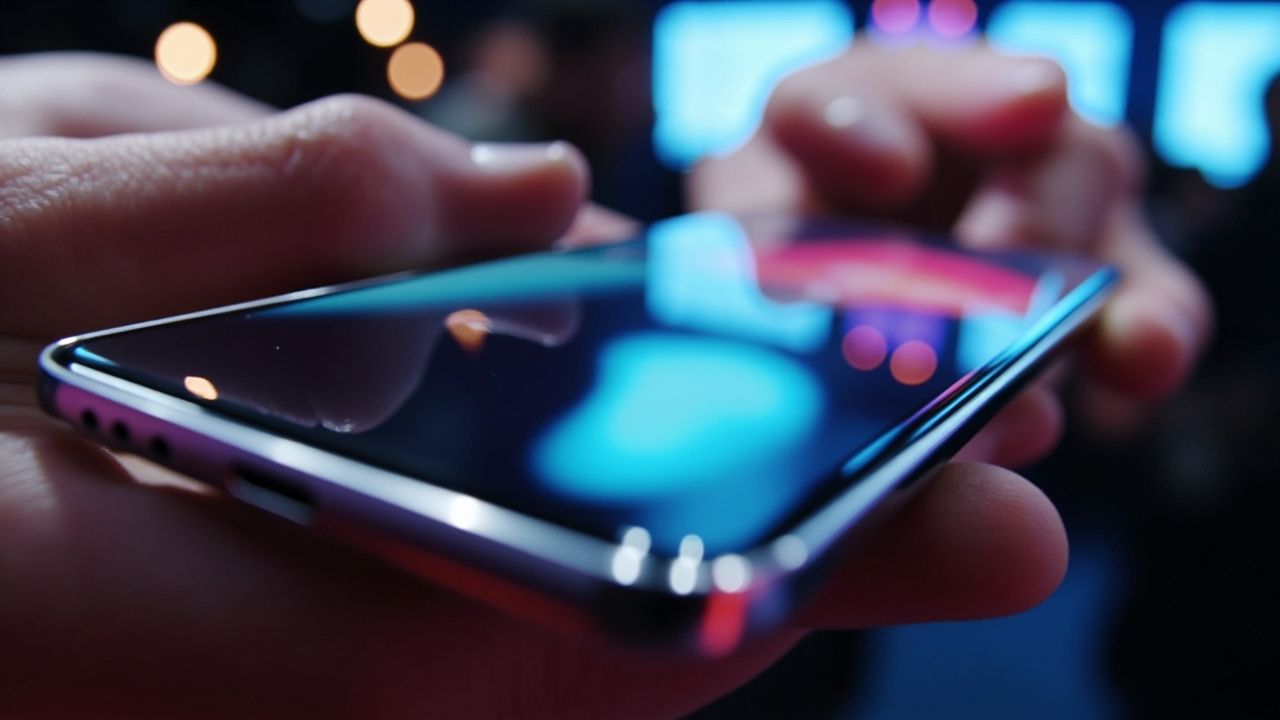
TL;DR: Tecno showed a concept phone called Bezelless at IFA 2026 in Berlin that hides the screen's inactive border under the metal frame to create a 0mm visible bezel.
Tecno revives the bezel race at IFA 2026
Tecno, a budget brand in the same family as Itel and Infinix, brought a concept device named Bezelless to the IFA trade show in Berlin, according to I held the first truly bezel-free phone | The Verge.
The phone is strictly a concept and was never destined to go on sale, as reported by The Verge in its hands-on account of receiving a prototype ahead of the unveiling.
The show context matters because smartphone makers spent much of the last decade shrinking display borders, then stopped when borders reached about a millimeter on every side, The Verge noted.
Tecno's answer was to tuck the edges of its display underneath the phone's thin metal frame rather than leaving the black inactive area visible, according to The best tech and gadgets announced at IFA 2026 | The Verge.
That publication described the result as nearly entirely eliminating a visible bezel and maximizing screen real estate.
How the 0mm visible border is achieved
Tecno said it achieved the 0mm display bezel through advanced internal stacking, structural re-engineering and novel screen packaging techniques, according to Tecno bezel-less concept phone hands-on - GSMArena.com news.
The key is two layers of cover glass, The Verge explained after examining a prototype.
The top layer goes up to the edge of the frame, while the lower glass layer and the OLED panel itself both extend underneath the frame, The Verge reported.
Tecno redesigned the assembly so the display module is inserted from the back of the phone rather than the front, a reversal of normal phone construction, according to both The Verge and GSMArena.
A custom adhesive sits between the frame and the lower piece of glass and secures the screen from the front, The Verge reported.
GSMArena described the same detail as a custom hot-melt adhesive that holds the second-layer cover glass from the front side.
The lower portion of glass wraps around the midframe and conceals the inactive area and black bezels that would normally sit in view, GSMArena reported.
Display size and core hardware
The Bezelless uses a 6.78-inch screen with 144Hz refresh rate and 1.5K resolution, The Verge reported.
GSMArena identified the panel as a 6.78-inch AMOLED with 1.5K resolution and 144Hz refresh rate.
The device is powered by a MediaTek Dimensity 7400e chipset, paired with 8GB of RAM and 256GB of storage, according to The Verge's roundup of IFA announcements.
The phone includes a 6,000mAh battery, The Verge reported in the same roundup.
The Verge's longer hands-on described the phone as fairly slim and light despite the large battery capacity.
That hands-on account said silicon-carbon battery technology might be involved, phrased as the author's suspicion rather than a company specification.
Cameras, rear design and selfie placement
What appear to be three rear cameras are actually two cameras plus design elements, The Verge reported.
The rear system includes a 50-megapixel main camera and an 8-megapixel ultrawide camera, The Verge reported.
The front includes a single 32-megapixel selfie camera, The Verge reported.
The selfie camera uses a punch-hole cutout at the top of the display rather than an under-display camera, according to The Verge and Tecno pushes bezel-less design further with IFA concept | t2ONLINE.
The Verge noted surprise that Tecno did not use an under-display selfie camera to complete the all-screen effect.
The rear has a butterfly design created with a 3D effect, so the wings appear to rise out of the phone as it moves in the light, The Verge reported.
t2ONLINE described the same rear treatment as a holographic, lenticular finish.
The Verge also noted a red notification LED on the rear of the prototype.
What it looks like in person
The Verge reported that, viewed head-on, the screen ends and the frame begins, with no black border around the 6.78-inch screen.
At an angle, the reviewer could see the tiniest hint of a black line just under the frame, particularly in the corners, The Verge reported.
GSMArena similarly reported that minor flaws remained as visible black bars around the bottom edges of the screen on its IFA Berlin 2026 unit.
In practice, GSMArena said apps, content and interface elements expand edge to edge and feel slightly more zoomed-in than on a regular phone.
GSMArena compared the prototype side-by-side with an iPhone 17 Pro Max, which it said has 1.36mm bezels.
The Verge compared the Bezelless side-by-side with a Samsung Galaxy S26 Plus and found clearly less material wrapping around the screen, though the difference was small.
The Verge said the frame on the Tecno is probably slightly thicker than on most other modern smartphones, but described the difference as fractional.
GSMArena said the metal frame feels wider compared with regular phones, even though no black borders are visible.
Touch, gestures and everyday trade-offs
With nowhere to rest a finger on a bezel, Tecno had to rework touch sensitivity and interface elements, GSMArena reported.
Tecno said that touch work will pave the way for future flagship innovations, according to GSMArena and t2ONLINE.
t2ONLINE reported that Tecno first teased the 0mm-bezel design a few weeks before IFA without demonstrating how it would work in use.
Ahead of the formal debut, YouTuber Marques Brownlee published a hands-on video examining the phone from multiple angles, t2ONLINE reported.
Brownlee said the raised frame used to hide the display border could be felt during edge gestures such as swiping up to return to home or swiping down to open notifications on Android, t2ONLINE reported.
He also said the design leaves less room than a conventional bezel for a case to sit around the display without overlapping the screen, t2ONLINE reported.
The Verge said removing the bezel does not make the phone feel dramatically more useful than other phones tested this year and called it welcome but not a game changer.
The same hands-on said photos and videos have no border on two edges, while letterboxing still affects the other dimension.
Why Tecno built it and what comes next
Tecno bullishly claims that the Bezelless redefines how users will interact with their phones in the AI era, The Verge quoted.
The Verge described that claim as overstated, arguing manufacturers stopped shrinking bezels because most people stopped caring once borders became small enough.
GSMArena said eliminating the bezel makes the device seem more futuristic, while also creating new challenges for Tecno around assembly and touch handling.
Tecno has not announced any plans to put the concept into production, The Verge reported.
t2ONLINE likewise reported that Tecno has not announced production plans for the design.
The Verge noted that none of Tecno's recent concepts shown at trade events, including a color-changing E Ink rear phone, a neon-equipped phone and a magnetic modular concept from MWC, have yet become real products.
The hands-on concluded that the Bezelless proves full removal of the visible bezel is possible and raises the question of whether another manufacturer will bring the idea to market, with Apple long rumored to be developing an edge-to-edge iPhone for the phone's 20th anniversary next year, as discussed by The Verge.