TL;DR: European and Japanese probes shed their carrier to start Mercury arrival
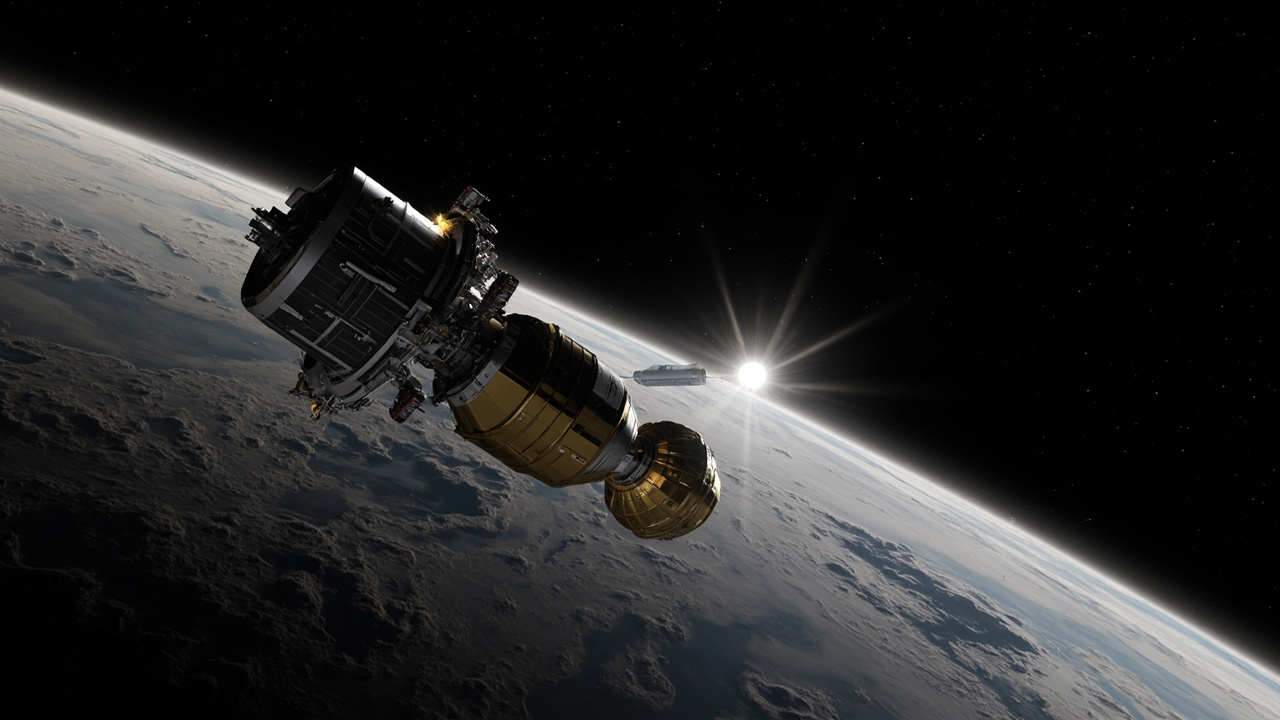
Two linked Mercury-bound probes cut loose from their transport carrier on Sept. 3, 2026, and began a final approach of about 2 million miles before a planned Mercury orbit arrival in November, according to the Associated Press.
The event moved the European Space Agency and Japan Aerospace Exploration Agency mission called BepiColombo from cruise to arrival operations. The paired orbiters stayed joined together after release from the Mercury Transfer Module while teams on Earth waited for radio confirmation, according to Space.com.
A planned separation begins the last leg
The separation happened Thursday as the spacecraft traveled far from Earth. Controllers received confirmation after a wait of about two hours, with the operation broadcast from the European Space Agency control center in Germany, according to the Associated Press. That center was more than 124 million miles, or 200 million kilometers, from the vehicle at the time.
Space.com reported the release occurred at 8:00 a.m. EDT, or 1200 GMT, while acquisition of signal came shortly before 10:00 a.m. EDT, or 1400 GMT. Telemetry then showed the remaining spacecraft in the expected configuration and location. Lead project scientist Geraint Jones called it “a brilliant moment,” according to the Associated Press.
The remaining flight pair consists of the European Mercury Planetary Orbiter, known as MPO, and the Japanese Mercury Magnetospheric Orbiter, known as Mio. The Mercury Transfer Module had supplied power and propulsion during the long inward journey, according to Space.com. With that module gone, trajectory and attitude functions pass to the reduced stack for the approach toward Mercury.
As of Thursday, the joined orbiters still had 2 million miles, or 3.3 million kilometers, to travel before reaching Mercury, according to the Associated Press. The final approach was expected to last about six more months of navigation and orbit-adjustment work.
Why controllers call this a new mission
European officials described Sept. 3 as an operational dividing line rather than arrival in orbit. Bruno Sousa, ESA head of operations definition and engineering, said during the mission livestream that the day marked effectively a fresh mission phase, according to Space.com.
That distinction matters because the spacecraft are not yet captured by Mercury’s gravity. Operations manager Elsa Montagnon said Mercury arrival involves extended activity rather than one large braking burn, according to Space.com. She said the phase would involve six months of continuous activities.
The schedule described before and on Sept. 3 calls for orbit insertion around Mercury on Nov. 21, according to Space.com. The Associated Press similarly reported that the conjoined BepiColombo spacecraft would enter Mercury orbit in November if operations proceed as planned. The pair would then separate from each other in December to observe the planet from different altitudes.
The post-insertion plan includes 16 maneuvers to lower and reshape the orbit, according to Space.com. Mio is scheduled to separate from MPO around Dec. 9 and move toward a highly elliptical polar orbit. MPO would then discard the Magnetospheric Orbiter Sunshield and Interface Structure, called MOSIF, on Dec. 16 before continuing toward its own polar orbit on March 10, 2027.
Eight years, billions of miles and nine flybys
BepiColombo launched in 2018, according to the Associated Press. Space.com reported the specific launch details as Oct. 19, 2018, aboard an Ariane 5 rocket from Europe’s Spaceport at the Guiana Space Center in Kourou, French Guiana. The original expectation was a journey of about seven years.
Instead, the route became long and looping. The spacecraft traveled more than 6 billion miles, or 10 billion kilometers, on a roundabout path, according to mission manager Santa Martinez as cited by the Associated Press. It used nine planetary flybys to shed enough energy to be captured by Mercury.
Space.com listed that flyby sequence as one of Earth, two of Venus and six of Mercury. The gravitational assists slowed the spacecraft during its sunward plunge. The last Mercury flyby, in January 2025, returned detailed views of impact craters and volcanic plains, according to the Associated Press.
A power problem added further complexity. In April 2024, a solar-panel issue reduced power available for the transfer module’s electric thrusters, according to Space.com. Engineers developed a lower-thrust trajectory that preserved the mission but moved Mercury arrival from December 2025 to November 2026. Sousa described BepiColombo as one of the most complicated missions the agency has flown, according to Space.com.
What the two orbiters are supposed to do
The European and Japanese orbiters carry complementary roles. MPO is intended to examine surface composition, geology and the planetary interior, while Mio is intended to investigate the magnetic field and its interaction with the solar wind, according to Space.com. Science operations are scheduled to begin April 6, 2027, with both spacecraft observing from complementary orbits.
The Associated Press reported that full science observations should begin next spring. Planned studies include the magnetic field around Mercury, the dense interior and surface geology. One focus is hollows, described as depressions that scientists believe are being enlarged as minerals vaporize from rocks.
Martinez said the mission confronts major questions despite Mercury’s small size, while Jones said much remains to be learned, according to the Associated Press. The mission is named for the Italian mathematician who participated in NASA’s Mariner 10 mission to Mercury in the 1970s.
Only NASA’s Messenger has previously orbited Mercury for extended study, according to the Associated Press. That history makes BepiColombo the next orbital mission and the first to place two coordinated orbiters around the planet.
A punishing thermal and power environment
Mercury’s closeness to the Sun creates severe heat, power and navigation demands. Temperatures on the planet can exceed 800 degrees Fahrenheit, or 427 degrees Celsius, while deep craters near the poles remain frigid and hold ice in permanent shadow, according to the Associated Press.
Engineers therefore designed the hardware for intense solar heating. Ignacio Tanco, an ESA mission operations chief, described the expected conditions as “extremely punishing,” according to the Associated Press. He compared operating near Mercury to working with intense heat directed continuously at the spacecraft.
The transfer module’s role reflected that challenge. It carried solar-electric propulsion and power systems through nearly eight years of flight before release, according to Space.com. Its departure leaves the smaller orbiter stack to manage the final approach with reduced mass but also without the carrier’s propulsion support.
The European Space Agency is covering most of the mission’s $2 billion cost, equivalent to 1.7 billion euros, according to the Associated Press. The investment supports at least one Earth year of coordinated science after the orbiters reach their final paths.
What happens between September and spring
The immediate weeks after separation are devoted to navigation toward Mercury. The orbiters remain joined while ground teams refine trajectory, orientation and timing for the November insertion, according to Space.com.
If insertion succeeds on Nov. 21, the spacecraft will begin months of orbit shaping. The December split of Mio and MPO will place them on separate tracks, followed by additional altitude-lowering burns for MPO into March 2027, according to Space.com. The science phase is then planned to begin in April.
The Sept. 3 milestone therefore does not mean the spacecraft are orbiting Mercury yet. It means the carrier stage completed its task and the two science vehicles entered the final guided approach, according to Space.com. Ground confirmation, telemetry checks and configuration verification were the decisive results announced Thursday, according to the Associated Press.
Sources referenced
- A pair of spacecraft draw closer to Mercury after nearly decade-long voyage - ABC News (https://abcnews.com/Technology/wireStory/pair-spacecraft-draw-closer-mercury-after-decade-long-136174356)
- 'A new mission starting today': 8 years after launch, BepiColombo begins Mercury arrival | Space (https://www.space.com/space-exploration/missions/a-new-mission-starting-today-8-years-after-launch-bepicolombo-begins-mercury-arrival)