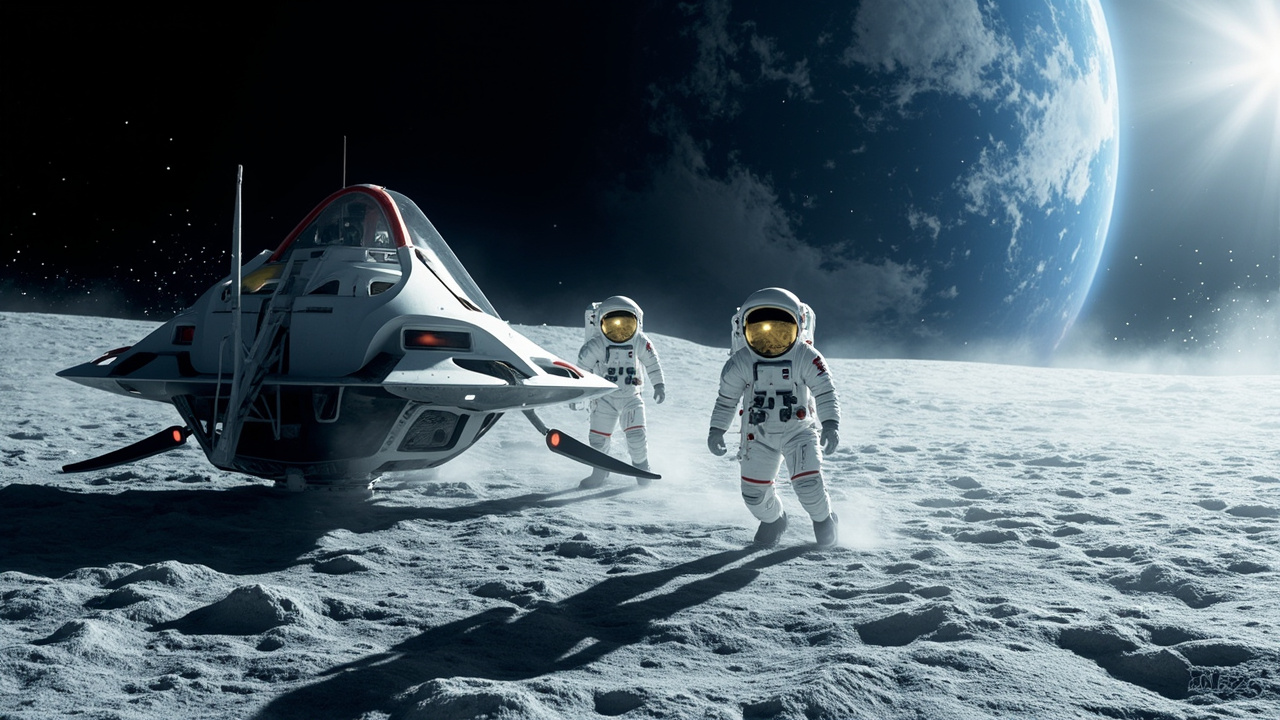
China Reveals Ambitious Plan for Manned Lunar Landing by 2030
Summary: China has publicly confirmed its intentions to land astronauts on the Moon by 2030. The announcement details a comprehensive plan that includes the development of new technology and spacecraft.
China has officially announced plans to achieve its first crewed lunar landing by 2030, marking a significant milestone in the country’s space exploration program. This announcement was made during a press conference by Lin Xiqiang, deputy director of the China Manned Space Agency (CMSA), on May 29, 2023. According to Lin, the venture is part of the broader Lunar Exploration Project, also known as the Chang’e Project.
Details of the Lunar Mission
The lunar landing mission will involve a series of groundbreaking technological advancements. The CMSA plans to utilize the Long March-10 rocket, which is designed to carry a lunar lander and a manned spacecraft into lunar orbit. In essence, the mission will involve sending the two crafts on separate journeys before they rendezvous in space and continue together to the Moon.
Once they reach the lunar surface, the taikonauts will undertake scientific exploration and collect samples for analysis. The lander, equipped to support two astronauts, will return to the orbiting spacecraft after their tasks are complete. The overall goal, as reiterated by Lin during the announcement, is not just to achieve a manned landing but to conduct extensive scientific research and technology tests, paving the way for future lunar exploration and understanding the Moon’s evolution (source: NY Times).
Technological Innovations in Development
The Chinese government is investing heavily in technology to support this mission. It includes the development of a new-generation manned spacecraft that consists of an escape tower, a re-entry capsule, and a service module. The total payload capacity of the Long March-10 will be approximately 27 tonnes, crucial for carrying all necessary equipment for their lunar missions.
In addition to the spacecraft, designers are also working on advanced lunar suits that will provide taikonauts with increased mobility during lunar surface operations. These suits are expected to have a working duration of no less than eight hours (source: Xinhua).
The mission timeline suggests that the upcoming launches of Long March-10 will be pivotal, with plans for the fifth and sixth launches to facilitate the transportation of astronauts and the necessary landing equipment for the lunar mission (source: NASASpaceFlight.com).
Challenges Facing the Program
While the ambitions of the lunar landing are striking, the program must overcome a multitude of challenges. According to Zhou Jianping, the chief designer of China’s manned space program, this mission will demand a carrying capacity significantly higher than previous missions, necessitating robust supportive technologies to maintain the astronauts' safety and mission success.
Zhou has stated, "I am very confident that China will accomplish the goal of landing people on the moon by 2030 and sending them back safely to Earth." This optimism underscores the commitment to expand China's presence and capabilities in space (source: NASASpaceFlight.com).
Broader Implications of the Lunar Mission
China’s pursuit of a manned lunar landing is expected to have extensive implications not just for its own scientific community but for global space exploration efforts. The mission will not only enhance understanding of lunar geology and resources but also contribute to the exploration of Mars and beyond. The advancements derived from this mission can lead to international collaborations, especially as countries increasingly seek to explore rich extraterrestrial resources.
Moreover, China aims to establish a lunar scientific research station in the future, which would facilitate ongoing investigations into the Moon’s surface and potentially serve as a base for future missions further into space (source: Xinhua).
China's rising ambitions in space have led to a renewed interest and competition among countries for lunar exploration. The successful implementation of their plans could serve as a significant achievement within the international community, potentially repositioning China's status as a leader in space exploration.
Key Takeaways
- China plans to achieve its first crewed lunar landing by 2030.
- The mission involves advanced spacecraft and technology, including the Long March-10 rocket and new lunar suits for astronauts.
- The program aims to enhance scientific understanding of the Moon while preparing for more challenging missions beyond.
- China is committed to building a lunar research station for long-term exploration.
FAQs
Q1: What is the timeline for China's lunar landing mission?
A1: China aims to land astronauts on the Moon by 2030, launching the required missions in the span leading up to that date.
Q2: What technology will China use for this mission?
A2: The mission will utilize the Long March-10 rocket and a new-generation manned spacecraft, alongside the development of specialized lunar suits.
Q3: Who is leading the lunar exploration project in China?
A3: The project is being led by the China Manned Space Agency (CMSA), with contributions from various engineers and scientists.
Q4: Why is this mission important?
A4: The mission is crucial for advancing lunar science, testing new technologies, and bolstering China's presence and capabilities in space exploration.
Q5: Will China collaborate with other countries on lunar exploration?
A5: While specific international collaborations have not been stated, there is potential for future partnerships as efforts in space exploration widen.
SEO Title: China Plans Manned Lunar Landing by 2030
SEO Description: China announces its aim to land astronauts on the Moon by 2030, detailing ambitious plans and new technologies.
Sources:
- China Announces Plan to Land Astronauts on Moon by 2030 - NY Times
- China unveils preliminary plan on manned lunar landing - Xinhua
Image Prompt: Futuristic lunar landing scene featuring a Chinese spacecraft on the moon's surface with astronauts (taikonauts) in advanced spacesuits conducting exploration activities, with Earth visible in the background, showcasing technology and ambition in space exploration.
Tags: lunar landing, China, space exploration, taikonauts, Chang’e Project, Long March-10, technology
Quality Scores:
- Source Quality: 1.0
- Factual Confidence: 1.0
- Originality: 1.0
- Niche Fit: 1.0
- SEO Readiness: 1.0
- Image Readiness: 1.0